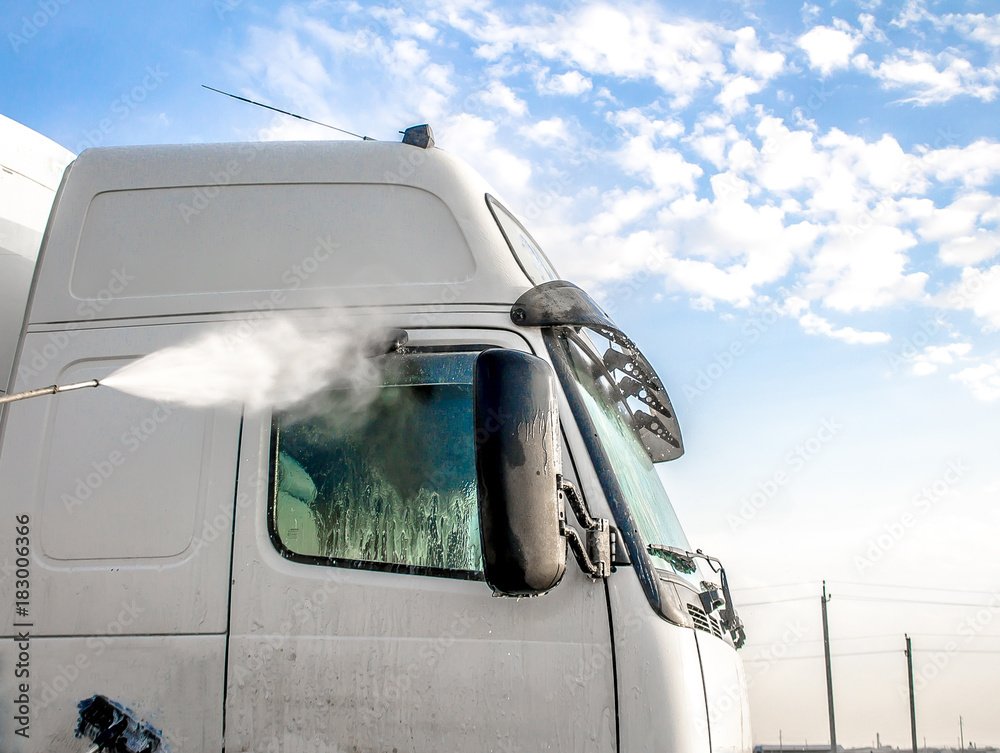
Mobile Fleet Wash Pricing
Fleet Washing Costs & Mobile Truck Wash Pricing Guide (2026)
If you’re researching fleet washing pricing for your business, you’re probably trying to answer a simple question:
What should this actually cost per truck? And what affects that number?
At Britewash, our mobile fleet washing services make up the majority of our work across Maine, New Hampshire, and Massachusetts. We wash everything from small 5-truck operations to large regional fleets with 50+ vehicles. Pricing can vary depending on equipment type, frequency, and service requirements.
This guide walks through:
Typical per-truck pricing ranges
What impacts fleet wash costs
How weekly vs. monthly service changes pricing
How costs differ across ME, NH, and MA
If you’d prefer a direct fleet washing quote based on your fleet’s details, you can request a fleet wash quote today.
How Much Does Fleet Washing Cost in Maine, NH & MA?
In most cases, fleet washing in Maine, New Hampshire, and Massachusetts ranges from $44 to $65 per truck (for a monthly wash) depending on equipment type, service frequency, and site conditions.
For example:
Straight trucks and smaller commercial vehicles typically fall on the lower end of that range.
Trailers and tractor trailers generally cost a bit more due to size and surface area.
Heavy-duty trucks and equipment (dump trucks, tankers, trash trucks) sit at the higher end because of buildup and wash time.
Here’s the important thing to keep in mind: those average ranges reflect the base price for a monthly recurring wash.
Weekly or biweekly fleet washing almost always brings the lowest per-truck cost. Fleet size is the other biggest factor impacting fleet washing prices: the larger your fleet, the larger of a volume discount you’ll typically qualify for.
While location can impact pricing slightly, it’s not nearly as big of a factor as service frequency, fleet size, and vehicle type(s).
Average Fleet Washing Prices
Below are general price ranges for mobile fleet washing in our service area (Maine, Massachusetts, and New Hampshire). These are typical contract rates for fleets on recurring service schedules.
Typical Mobile Fleet Washing Prices (Per Unit, Monthly Washes)
Straight trucks: $44-49 per unit
Fuel Delivery Trucks: $44-49 per unit
Pup Trailers: $44-49 per unit
Trailers: $50-55 per unit
Heavy Duty (Gravel/Tankers/Trash/Dump): $60-65 per unit
Small Vehicles (Car/Van/Pickup) - $20-25 per unit
Trailer washouts: $32-38
Undercarriage Flush: $18 per unit
Get Reliable Fleet Washing today
At Britewash, we’ve been cleaning vehicle fleets across ME, NH, and MA for 30 years. Our mobile fleet washing trucks use the latest technology to deliver efficient, quality cleans on a schedule that works for your business.
| Vehicle Type | Monthly Range (per truck)* | Weekly Range (per truck)* |
|---|---|---|
| Straight trucks | $44–49 | $40–44 |
| Trailers | $50–55 | $45–50 |
| Heavy duty trucks | $60–65 | $54–59 |
| Small vehicles | $20–25 | $18–23 |
| Trailer washouts | $32–38 | $29–34 |
*Important note: Most fleets receive better per-truck pricing with weekly or biweekly service.
One-time or monthly washes are typically higher per unit because dirt builds up, requiring extra time and labor to clean those vehicles. As we’ll discuss more below, size of fleet, location, and other factors can also affect pricing
If your fleet includes mixed equipment (for example, tractors + reefers + dump trailers), pricing is typically customized based on the blend.
What Most Fleet Managers Want to Know
Here are a few practical realities that most business owners and fleet managers find important when they’re researching mobile fleet washing prices:
The difference between weekly and monthly service can be significant.
Larger fleets almost always qualify for volume pricing (assuming all vehicles are washed at each event)
Brightening, brushing, or environmental compliance (water recovery) can affect total cost.
There is no meaningful price difference between Maine and New Hampshire — Massachusetts sometimes requires additional environmental considerations depending on site conditions.
We’ll break all of this down in more detail below.
What Determines Fleet Washing Costs?
Fleet washing pricing isn’t random. It usually comes down to five main factors:
How many trucks you have
How often you wash them
What type of equipment you’re running
What add-on services you need
And whether environmental compliance is required on-site
If you understand these variables, mobile truck wash costs become much easier to estimate and understand.
1. Fleet Size
Fleet size is one of the biggest pricing drivers for mobile fleet washing.
A 5-truck operation will almost always pay more per truck than a 50-truck fleet. That’s because setup time, travel, and equipment staging are largely the same regardless of fleet size. They’re fixed costs, and larger fleets spread those fixed costs across more units.
In most markets (including ME, NH, and MA), volume discounts typically look like:
10-25 trucks: standard per-unit pricing
25-50 trucks: small volume reduction (often 3–7%)
50+ trucks: larger volume pricing (often 8–15%)
Exact discounts can vary, but the pattern is always the same: the more consistent volume we can wash in one visit, the more efficient the travel and washing process becomes.
And that’s reflected in the per-truck cost you pay.
2. Frequency of Service
Wash frequency has a big impact on fleet washing prices.
Weekly or biweekly service almost always reduces per-truck cost (compared to monthly or one-time washes). That’s because dirt and grime buildup is lighter, cleaning is faster, and labor time per vehicle is lower.
Here’s how pricing typically shifts:
Weekly service: lowest per-unit rate
Biweekly service: slightly higher than weekly
Monthly service: noticeably higher due to buildup
One-time washes: highest per-unit cost
Put simply, the more often your fleet gets washed, the lower your cost per wash will be.In many cases, moving from monthly to weekly service can reduce per-truck pricing by as much as 5–15%.
If you own or operate a commercial vehicle fleet you probably already know this, but let’s state the obvious: your vehicles are a huge investment. Given that cost, and the impact cleanliness has on how customers perceive your brand, it’s easy to see why most fleets benefit from frequent recurring service.
One other thing to consider with wash frequency is seasonality. Seasonal adjustments can be common, especially in places with harsh winters like New England. Some fleets scale up wash frequency during winter (salt, grime, etc.) and scale down during warmer months.
3. Equipment Type
Different trucks take different amounts of time to wash. It’s logical when you stop and think about it, but it’s also one of those things that’s easy to overlook when you’re evaluating fleet wash prices.
Here’s how equipment typically affects cost:
Straight trucks / box trucks: Generally faster to wash and lower cost.
Tractor trailers: Larger surface area increases time and water usage.
Reefer trailers: Often require more detailed cleaning and sometimes interior washouts.
Tankers: Surface type and shape can affect labor time.
Dump trucks / gravel trailers: Heavy buildup can increase cleaning time.
Heavy equipment: Mud, grease, and undercarriage buildup can significantly increase wash time.
For example, in many New England markets:
A box or straight truck wash might range from $44-$49+ (monthly)
A tractor trailer wash might range from $50-55 per unit (monthly)
Heavy equipment washing costs can be even more (depending on condition).
Mixed fleets are usually priced based on a blended rate.
4. Add-On Services
Basic fleet washing typically includes exterior cleaning of the cab and trailer. Beyond that, many fleet wash companies offer add-ons that affect pricing.
Common add-ons include things like:
Undercarriage flush: Usually $18-20 per unit
Trailer washout: Frequently $32-40 depending on condition and debris.
Water recovery: Required in some locations; adds equipment and setup time.
These add-ons often aren’t needed at every wash, so many fleet owners build them into quarterly or seasonal maintenance schedules.
Some fleet washing companies might include additional add-ons, but at Britewash other services like brightening and brushing fall under our standard washes. That’s because we do what’s needed to bring your fleet back to our high level of cleanliness – some weeks that may include a brightening service, other weeks it may not be needed.
5. Water & Environmental Compliance
This matters most in Massachusetts, though it can apply throughout New England (based on your municipality’s regulations).
If your site requires any of the below, it can affect pricing:
Water recovery
Specific discharge containment
Off-site water supply
Special environmental documentation
Bringing water to a site increases setup time and transportation weight. Using water recovery equipment increases labor and equipment requirements.
In Maine and New Hampshire, compliance requirements are often simpler at industrial sites. Fleet washing prices in Massachusetts can be higher, because certain municipalities and commercial properties require stricter containment protocols.
If environmental compliance is required, pricing will reflect the additional time and equipment involved — but it also protects your business from regulatory risk and major issues with local and state governments.
Putting it all together
Most fleet washing pricing is driven by a combination of factors, not just one factor.
For example:
A 40-truck fleet on weekly service will usually receive strong volume pricing.
A 6-truck fleet on monthly service with heavy equipment and brightening will be higher per unit.
A Massachusetts site on Cape Cod requiring water recovery may cost more than a similar fleet in Portsmouth.
The good news is that pricing becomes very predictable once those variables are defined.
Is Mobile Fleet Washing More Cost-Effective Than In-House Washing?
When fleet managers compare pricing, the real question usually isn’t just “What does it cost per truck?”
It’s really more like: “Should we handle washing in-house, or outsource it to a mobile fleet washing company?”
On paper, in-house washing can look cheaper. In reality, the total cost is often higher once everything is accounted for.
Here’s how the two approaches typically compare.
In-House Fleet Washing Costs
Running your own wash setup means you control the schedule. But you also carry all the overhead.
Common in-house costs include:
Labor
Someone has to wash the trucks. That might mean:
Paying drivers overtime
Hiring dedicated wash staff
Pulling mechanics or yard workers off other tasks
Labor is usually the largest hidden expense. Even if you’re not cutting a separate payroll check, time spent washing is time not spent on revenue-generating work. If your drivers have a ton of down time that might not seem like a big deal, but when you’re in the middle of busy season, it’s a major problem.
Water & Utilities
Water usage adds up quickly with larger fleets. If you’re running pressure washers regularly, you’re also paying for:
Water consumption
Sewer discharge
Electricity or fuel for equipment
In certain municipalities, discharge regulations may require additional containment or documentation, and you’re responsible for that (even if it’s not your area of expertise).
Equipment Investment
In-house washing requires:
Pressure washers
Hoses and reels
Tanks (optional)
Water heating systems
Detergents and chemicals
Maintenance and repairs
Equipment wears out. Pumps fail. Hoses crack. Those costs aren’t always considered when comparing per-truck pricing for keeping your vehicle fleet clean.
Compliance & Environmental Risk
Environmental compliance is often underestimated. It can get complicated quickly, and it can lead to major fines and brand reputation risks.
Improper discharge, chemical handling, or runoff can create liability — especially in Massachusetts or near storm drains.
If your operation requires water recovery or containment, your equipment investment increases significantly.
Downtime costs
Trucks sitting in line to be washed aren’t moving freight. Even small delays can affect routing, loading schedules, and driver productivity.
For fleets operating on tight logistics schedules, downtime often costs more than the wash itself. When you work with a professional fleet washing company like Britewash, these downtimes costs can be minimized because we’ll work around your schedule to minimize disruptions.
When In-House Washing Makes Sense
In-house washing can make sense for:
Very small fleets with minimal equipment
Rural operations with low regulatory oversight
Fleets that already have infrastructure and staff dedicated to washing
Even then, it’s worth calculating the full costs — not just water and soap.
Mobile Fleet Washing Costs
With mobile fleet washing, pricing is typically structured as a predictable per-unit cost.
That cost includes:
Per-Truck Pricing
You pay a set amount per vehicle based on:
Equipment type
Frequency
Add-ons
There’s no capital investment and no equipment maintenance to manage.
No Equipment Overhead
Mobile fleet washing companies bring:
Commercial-grade washing equipment
Water (if needed)
Detergents
Recovery systems (when required)
You don’t purchase, store, repair, or replace any of it.
Reduced Labor Burden
Your drivers and yard staff stay focused on their primary responsibilities.
There’s no overtime allocation, no supervision of wash staff, and no internal coordination required. No grumbling and complaining if someone’s stuck washing a truck (again!).
Managed Compliance
A professional fleet washing provider handles:
Proper chemical use
Safe procedures
Water recovery when needed
Insurance coverage
That shifts regulatory and liability risk away from your business, keeping you safe.
When Mobile Fleet Washing Makes Sense
Mobile fleet washing is typically more cost-effective when:
You have 10+ vehicles
You operate in regulated areas
Downtime impacts operations
You want consistent, professional appearance across your fleet
You don’t want to manage equipment or compliance
For many fleets in Maine, New Hampshire, and Massachusetts, the cost difference isn’t dramatic, but the operational simplicity is a game-changer for busy business owners and fleet managers.
A Practical Fleet Washing Price Comparison
If your in-house wash costs $25–$35 in labor and materials per truck — before accounting for equipment depreciation, compliance risk, and downtime — outsourcing at $40–$60 per unit may not be significantly more expensive in real terms.
And in many cases, it’s actually less expensive when those calculations are fully loaded with all the factors mentioned above.
The right choice depends on your fleet size, schedule, and operational priorities. But for growing fleets, mobile fleet washing is often the more predictable and scalable option.
Above all, it allows you to keep your focus and attention on your core business operations and customers, not the logistics of keeping your fleet clean.
If you’re searching for fleet washing prices near you in Maine, New Hampshire, or Massachusetts, the best estimate comes from reviewing your fleet size and site details directly.
Fleet Washing Prices in Maine, New Hampshire & Massachusetts
Fleet washing prices are generally consistent across New England, but there are small differences depending on location, access, and environmental requirements.
Britewash services fleets across Maine, New Hampshire, and Massachusetts, including major distribution hubs, industrial parks, and rural yards. Based on our experience, here’s what businesses in each state can expect.
Fleet Washing Prices in Maine
In Maine, most fleet washing pricing is straightforward. Industrial sites in areas like Portland, Southern Maine, and along major transportation corridors typically have adequate space and drainage for efficient on-site washing.
For recurring service, monthly baseline pricing for fleet washing in Portland often falls within standard regional ranges:
Straight trucks: typically $44-49 per unit
Trailers: typically $50-55 per unit
Heavy duty trucks like tankers and dump trucks: $60-65 per unit
Weekly and biweekly service almost always reduces those per-unit numbers.
Because many Maine sites have fewer regulatory restrictions than dense urban areas, environmental compliance requirements are usually simpler (though site-specific conditions always matter).
If you operate near Portland or in Southern Maine, pricing is generally predictable as long as access and water supply are straightforward.
Fleet Washing Prices in New Hampshire
Fleet washing pricing in New Hampshire is very similar to Maine.
For instance, fleet washing in Manchester, the Seacoast region, and major distribution corridors, pricing is typically driven more by fleet size and frequency than by location.
Recurring contract rates often align closely with Maine pricing:
Straight trucks: typically $44-49 per unit
Trailers: typically $50-55 per unit
Heavy duty trucks like gravel trucks and trash trucks: $60-65 per unit
Most New Hampshire fleets benefit from weekly or biweekly scheduling, especially during winter months when road salt increases buildup.
Environmental requirements are usually manageable, but certain commercial properties may require additional runoff considerations.
Fleet Washing Prices in Massachusetts
Massachusetts fleet wash pricing can be slightly different, depending on site conditions.
Fleet washing in Greater Boston and other dense commercial areas often means environmental compliance is more likely to affect pricing. Some properties require water recovery or stricter discharge controls, which increases setup time and equipment use.
Baseline monthly ranges often resemble those in Maine and New Hampshire, but lean slightly higher:
Straight trucks: commonly $48-53 per unit
Tractor trailers: often $55-60 per unit
Heavy duty trucks (dump trucks, trash trucks, etc): $62-67 per unit
If water recovery is required, pricing may increase to account for the additional labor and equipment involved.
For fleets operating in industrial parks outside of major urban centers, pricing often mirrors Maine and New Hampshire rates more closely.
Do Prices Really Vary That Much by State?
In practice, fleet washing cost is driven mostly by:
Fleet size
Service frequency
Equipment type
Site access
Compliance requirements
State lines themselves don’t usually create large price swings.
For example:
A 30-truck fleet on weekly service in Portland, ME will often be priced similarly to a comparable fleet in Manchester, NH.
A tight urban site in Boston requiring water recovery may cost more than a similar-sized rural fleet in Maine.
The most accurate way to get commercial fleet washing prices is to look at your specific fleet details, site location, and compliance requirements.
Example Fleet Washing Pricing Scenarios
Sometimes it’s easier to understand fleet washing costs by looking at real-world examples. The scenarios below are typical of fleets we see across Maine, New Hampshire, and Massachusetts.
These are estimates for illustration. Final pricing always depends on site conditions, equipment mix, and service frequency. If you’re curious what it would cost to put your fleet washing
Example 1: 18-Unit Box Truck Fleet in Portland, ME
18 straight trucks
Weekly service
Exterior wash only
Adequate yard access
Estimated per-truck cost: $38–$45
Estimated monthly investment: $2,700–$3,200
Because this fleet is on weekly service, buildup stays light. That keeps labor time down and per-unit pricing lower than monthly washing would. It also protects your fleet, because the buildup of road grime, salt, and dirt can damage your vehicles’ exteriors and undercarriages.
If this same fleet switched to monthly washing only, per-truck cost might rise into the $45–$55 range due to heavier soil and longer wash times.
Example 2: 42-Unit Mixed Fleet in Manchester, NH
20 tractor trailers
12 box trucks
10 reefers
Biweekly service
Estimated blended per-unit cost: $48–$65
Estimated monthly investment: $4,000–$5,500 depending on scope
Mixed fleets are usually priced using a blended rate based on equipment type. Biweekly service keeps pricing competitive, but not quite as low as weekly service.
Because reefers and tractors require more surface area cleaning, they tend to sit at the higher end of the range. And of course, the optional brightening add-on also adds an additional cost per vehicle — if you were concerned about budget, the brightening frequency could be dropped to monthly or even quarterly.
Example 3: 65-Unit Regional Fleet (MA)
40 tractor trailers
15 straight trucks
10 dump trailers
Weekly service
Water recovery required
Estimated per-unit range: $45–$70 depending on equipment
Volume discount applied: approximately 8–12% compared to small fleet pricing
Estimated monthly investment: $7,500-$11,500
Water recovery at the Massachusetts site adds some labor and equipment time, but the large fleet size helps offset that through better volume pricing.
For fleets of this size, predictable scheduling and efficiency typically result in stronger per-unit rates than smaller operations receive.
Fleet Washing Pricing FAQs
How much does fleet washing cost per truck?
Fleet washing typically ranges from $35 to $75 per truck, depending on equipment type, frequency, and condition.
Straight trucks on weekly service usually fall at the lower end of that range. Tractor trailers, reefers, and heavy equipment typically land toward the higher end due to size and cleaning time.
Monthly or one-time washes generally cost more per unit than recurring weekly service.
The most accurate pricing depends on fleet size, location, and whether any add-on services are needed.
What is the average mobile truck wash price?
For recurring service in Maine, New Hampshire, and Massachusetts, the average mobile truck wash price is commonly:
Straight trucks: around $35–$55
Tractor trailers: around $45–$75
Add-ons like brightening, trailer washouts, or water recovery are priced separately.
Weekly service usually brings the lowest per-truck rate.
Is weekly fleet washing cheaper than monthly?
Yes, weekly fleet washing almost always results in lower per-unit pricing.
When trucks are washed weekly, dirt and road grime don’t build up as heavily. That reduces labor time and cleaning effort, which allows for more competitive pricing.
Monthly washing often costs more per truck because buildup requires additional time and detergent to remove.
Many fleets find that recurring fleet washing service balances cost and results best.
Do you offer volume discounts for larger fleets?
Yes, larger fleets typically qualify for better per-unit pricing.
When more trucks are washed during a single visit, setup and travel time are spread across more units. That efficiency is reflected in the final rate for your fleet pressure washing.
Exact discounts depend on fleet size and frequency, but fleets with 25+ units usually see stronger pricing than smaller operations.
Does fleet washing pricing vary by state?
Pricing is generally similar across states, like in the examples of Maine and New Hampshire.
In Massachusetts, pricing can be slightly higher in certain locations due to environmental compliance requirements, such as water recovery or stricter discharge controls.
That said, fleet size, frequency, and equipment type usually influence cost more than state borders.
Do you require long-term contracts for fleet washing?
Most fleet washing is structured as recurring service, but long-term contracts aren’t always required. At Britewash, we can offer better rates for longer-term contracts.
Many fleets start with a recurring schedule (weekly or biweekly) and adjust based on operational needs.
Consistent service typically results in better per-truck pricing than one-time washes.
Is water recovery included in the price?
Water recovery is included when required, but it can affect pricing depending on site conditions.
If your property requires containment or recovery equipment, that adds setup time and labor. We assess those requirements during the quoting process so pricing is clear upfront.
How quickly can I get a fleet washing quote?
In most cases, we can provide a quote shortly after reviewing your fleet size, equipment type, location, and preferred service frequency. It doesn’t take long at all.
Providing details such as those below helps us deliver an accurate per-unit rate quickly:
Number of trucks
Type of equipment
Service address
Desired schedule
Getting started is easy. You can request a no-hassle, totally free fleet washing quote today.
Why Over 100 New England Fleets Trust Britewash
Fleet washing isn’t complicated, but it does need to be consistent, reliable, and done properly.
Most of the fleets we work with aren’t looking for the cheapest option. They’re looking for a provider who shows up on schedule, does the job correctly, and makes the process easy.
Here’s what matters to them.
We Come to You
Our mobile fleet washing service is designed to minimize disruption for your business.
We wash on-site at your yard or facility, so your trucks don’t have to leave the property or wait in line at a wash bay. That keeps drivers on schedule and reduces downtime.
For fleets operating across Maine, New Hampshire, and Massachusetts, that flexibility matters.
2. We Handle Water Supply and Recovery When Needed
Some sites have water access. Others don’t.
We can bring our own water if necessary, and we can provide water recovery when required by property management or local regulations. That removes a layer of logistical and compliance responsibility from your team.
3. We Work Around Your Schedule
Most fleets operate on tight timelines. Early departures, late returns, and rotating shifts are common.
We structure wash schedules around your operations — whether that means overnight, early morning, or specific yard access windows.
Weekly, biweekly, and monthly service plans can also be adjusted seasonally. For example, many fleets increase frequency during winter due to salt buildup.
4. We Understand Commercial Equipment
We regularly wash fleet vehicles of all kinds, including:
Straight trucks
Tractor trailers
Reefers
Dump trucks and gravel trailers
Tankers
Heavy equipment
Each type of equipment requires a slightly different approach. Knowing how to clean efficiently without causing damage is part of the job, and we’ve been doing it for over 30 years. We don’t keep an exact count, but we’ve probably washed well over a hundred thousand trucks over the last few decades. That kind of experience can’t be faked, and it’s a big reason so many fleets choose our onsite commercial truck washing service.
5. We Keep It Predictable
Fleet managers generally want two things:
Clear per-unit pricing
Consistent results
Once service details are defined, pricing becomes predictable. There are no surprise add-ons unless something changes operationally.
That consistency is why many of our fleet clients stay on recurring service schedules long term.
Get Your Custom Fleet Washing Quote Today
If you’ve reviewed the pricing information above and want a clear answer for your New England fleet, the next step is simple.
We’ll need a few details:
Number of trucks or trailers
Equipment types
Service location
Preferred frequency (weekly, biweekly, monthly)
With that information, we can provide a straightforward per-unit rate based on your operation.
There’s no obligation, no hidden fees, and no complicated process. Just clear pricing based on your fleet’s real needs.
You can request pricing for your fleet wash here, or call us directly at 207-451-9880 to discuss your fleet’s needs.